It’s 9pm on a Thursday.
You finally closed your laptop twenty minutes ago. Your partner asked you a question about the weekend. You answered, but you don’t actually remember what you said.
Because part of your brain is still running through tomorrow’s decisions.
The client deliverable that needs your review. The team member waiting for direction on something that should be straightforward by now. The coordination between moving pieces that still depends on you stepping in.
You didn’t mean to drift there. You just do.
This is what growth bought you. A business that requires constant attention.
Execution happens, but you wouldn’t bet on it without watching it. Decisions depend on your judgment. Coordination lives in your head. Your attention became the operating system.
And if you step away for a few days, nothing explodes. But nothing compounds unless you’re there either.
You started this business for the work that builds something bigger than the day-to-day.
The strategic thinking. The moves that compound. The vision you could see so clearly at the beginning.
But most days now, you’re preventing drops. Clarifying what should already be defined. Making decisions that feel like they should be automatic.
Slack finds you at dinner. You tell yourself you won’t check it. You check it anyway.
Weekends are technically yours, but part of your brain is always running: what needs clarifying, who needs direction, which decision can’t wait until Monday even though it probably should.
The vision is intact. It’s just starved of time.
You rarely feel momentum anymore. Mostly maintenance.
The business looks fine from the outside. Revenue growing, clients coming in. But internally, you’re aware that one missed decision could slow the whole thing down.
You have ideas. Good ones. They just don’t become builds because there’s no protected time to design them.
And innovation feels risky. Not because the ideas are bad, but because you don’t have the bandwidth to think them through properly.
The business follows you home.
It hums in the background of every dinner, every weekend, every moment that should be fully yours but never quite is.
This is a design problem.
The business works because you’re involved. Growth didn’t remove complexity. It concentrated it and put you at the center of it.
Running looks like constant involvement.
Leading looks like designed momentum.
It comes down to whether momentum is designed into the business, or borrowed from your attention.
Once you can see that, the fix becomes specific.

Heath Close
Hi. I’m Heath Close.
I design scalable business foundations for growing companies.
I’ve spent years watching what actually happens when businesses grow. Most respond by pushing harder. Working more hours. Hiring more people. Trying to execute their way out of structural problems.
It doesn’t work.
The businesses that scale without burning out the founder have something different. A clear operating foundation. The business knows what to do without constant direction. Momentum is designed in, not borrowed from the founder’s attention.
The others grow by stacking workarounds. And the founder quietly becomes the infrastructure the business pretends it doesn’t rely on.
I’ve seen this pattern repeat. In startups. In established companies. Different scales, same underlying issue.
When a business lacks structural coherence, growth makes you more essential, not less.
In larger organizations, teams do good work but still fail to move the business forward together. Because the organization doesn’t function as a coherent whole. For solo founders with contractors or small teams, the same thing happens at a smaller scale. Good work gets done, but coordination still depends on you.
The real leverage lives in the seams between functions, and those seams stay unowned. Progress depends on constant alignment, clarification, and follow-up, because the system itself isn’t doing that work.
So the person in charge steps in.
And sometimes that turns into control, because it feels like the only way to keep things from collapsing. But the cost shows up everywhere else. Autonomy erodes. People stop taking initiative. Innovation slows. Retention suffers. Direction blurs.
Eventually everyone is focused on the fear of doing it wrong rather than taking initiative and moving the business forward.
That’s what running looks like once complexity outpaces structure.
Leading requires something else. A foundation that sets direction, aligns decisions to it, and allows the business to move toward a shared north star without constant correction.
In that environment, the founder’s involvement shapes direction and priorities instead of patching gaps and holding momentum together.
My work is about establishing that foundation.
So clarity, coordination, and momentum don’t depend on constant intervention, vigilance, or personal presence. So the business can carry its own weight.
That’s the lens behind The Scale Architecture™ Intensive.
We look at how your business actually operates right now. How transformation is defined. How work flows. How decisions get made. Where coordination still depends on you personally. And what would need to change for that to stop being true.
We use five diagnostic disciplines to evaluate each architecture and surface where structural coherence is breaking down.
The output is a 90-day roadmap.
It shows what must change, and in what order, so the business can carry its own weight instead of functioning only when you’re actively holding it together.
This is how you get your time back.
By restructuring how the business works so your attention flows where it actually matters. The strategic thinking. The innovation. The vision work you started this business to do.
What We're Building
Scalable Operations Architecture
A business that runs without you instead of depending on your constant involvement.
Scalable Offer Architecture
More revenue and more impact without more hours. Delivery decoupled from your time.
Scalable Influence Architecture
Lead and influence at scale. Your role evolves from the person who built this business to the person who leads what it becomes next.
These are the foundations that determine whether your business runs because you're involved, or runs because it's designed to.
Here's How it Works
Step 1 - Pre-Session Alignment
Before the session, you’ll receive a short set of targeted questions.
You’ll be asked about:
- How the business actually operates day to day
- What work repeats every week or month
- Where decisions, coordination, or follow-up regularly require your involvement
You’ll also be asked to share a simple list of recurring work. Just what keeps happening.
This gives me a grounded view of how the business functions in practice, so the diagnostic reflects what's actually going on.
Step 2 - The 90-Minute Diagnostic
We use five diagnostic disciplines to examine these architectures and identify where structural coherence breaks down:
- How transformation is defined
- How the client journey is designed
- How delivery functions in practice
- How decisions get made and guided
- How your role is structured inside the system
This is where we surface the structural patterns that govern how the business works.
Step 3 - Your 90-Day Execution Roadmap
Within 7 days, you receive a 90-day roadmap designed for execution.
You’ll see:
- A small set of clear structural priorities that must change
- The specific work required under each priority, written in plain language
- The sequencing that matters, so you know what needs to happen first and what comes next
- A practical weekly rhythm for the next 90 days, so momentum doesn't depend on memory or constant oversight
- Clear definitions of “done,” so work actually completes instead of circling in refinement
This gives you a concrete path forward.
Heath's Five
Diagnostic Disciplines
Transformation
Your anchor. The shared definition of what the business is actually trying to deliver.
We look at whether different parts of the organization are oriented around the same outcome, or optimizing for different things entirely.
When this is off, teams work hard and still pull in different directions. Decisions feel situational. Momentum stalls because there's no true north guiding trade-offs.
We identify what the business is actually oriented around today and where that orientation breaks down.
Where transformation becomes lived experience.
We examine how someone moves from first contact to real outcome, and whether that path is intentionally designed with clear beats and structure, or held together by your ongoing coordination.
When this breaks down, handoffs depend on you. Context has to be re-explained. People lose orientation, and progress slows in places that should be automatic. Without clear structure, delivery can't be systematized, repeated, or trained. It stays dependent on you knowing what comes next.
We surface where the journey no longer carries clarity or quality on its own.
Where the designed experience either holds or degrades in practice.
We look at how work is delivered day to day, whether there's a consistent operating rhythm, and whether delivery follows the structure you've designed or still requires your direct coordination to happen reliably.
When delivery is unstable, the same bottlenecks reappear no matter how many times they're "fixed." The system adapts around the problem instead of resolving it. Work gets done, but it doesn't follow a repeatable process.
We assess whether delivery is structurally sound or quietly dependent on you.
How the business knows what to do next.
We examine how decisions are currently made, what signals are actually guiding them, and where judgment is being substituted for structure.
When signals are unclear, leaders stay deeply involved because they have to be. Decisions feel heavy. Progress depends on attention instead of orientation.
We clarify what the business needs to be able to see.
Shifting from running your business to leading it.
We look at where your involvement is currently required, where it's compensating for missing structure, and where it would be most valuable if the system were doing its job.
When this is unclear, founders stay stuck in operating mode even as the business grows.
We identify what would need to change structurally for your role to shift.
By the end of the 90-minute session, you’ll have:
- A clear view of the structural patterns weakening your architecture, including where coherence breaks down and why momentum still depends on you.
- Clarity on what is happening at the structural level, not just the symptoms you’ve been reacting to.
- A shared frame for what must change next, so the conversation moves from speculation to diagnosis.
Within seven days, you’ll receive:
- A 90-day execution roadmap that does the synthesis work. It lays out what must change, the specific work required under each priority, the sequencing that matters, and a practical weekly rhythm for the next 90 days.
What founders say about working with Heath
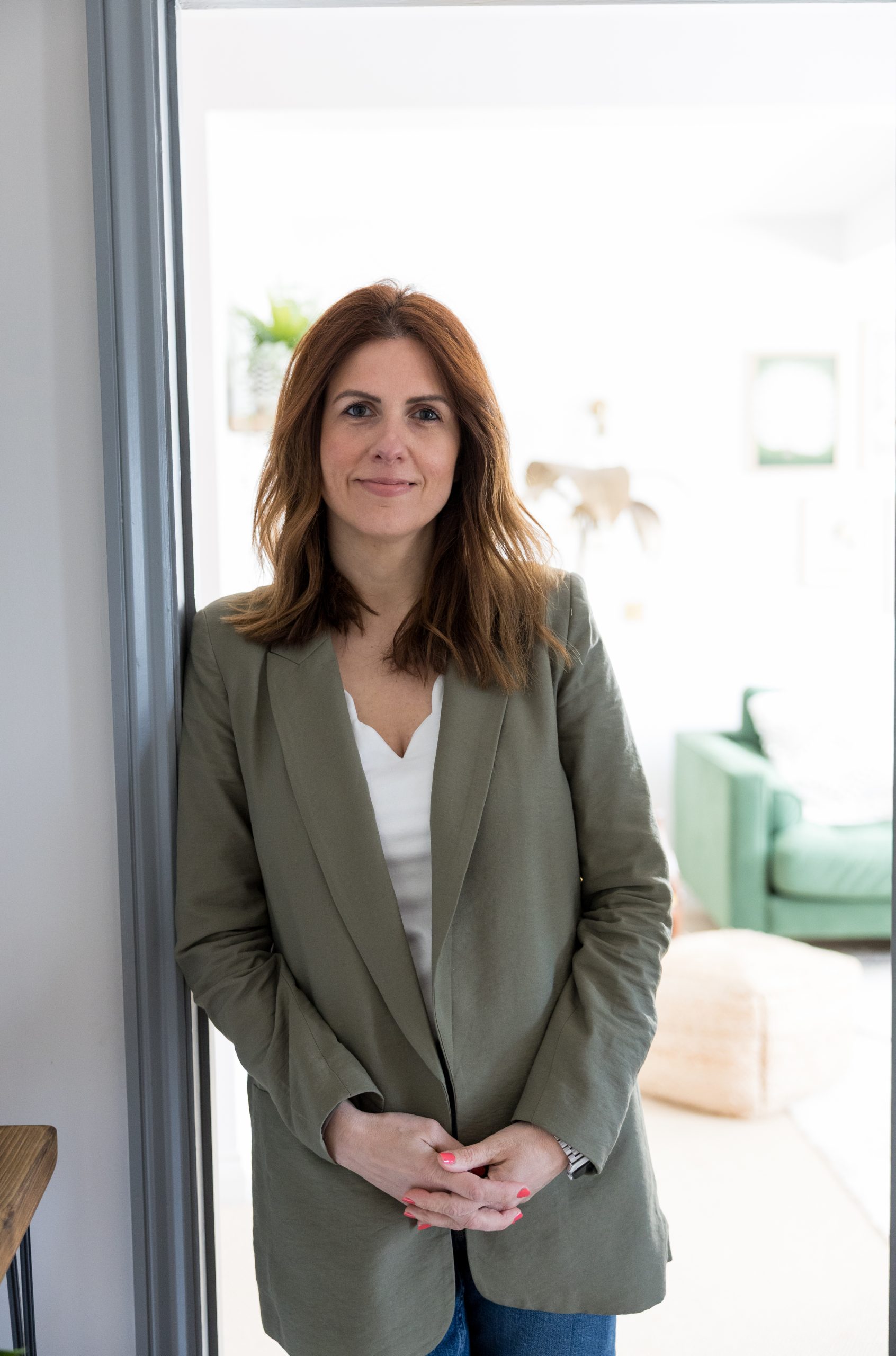
"Heath has an incredibly calm and relaxed persona that immediately puts you at ease and he's fantastic at gathering and distilling complex information into clear, digestible insights. His technical skills are top-notch, and he’s built some amazing tech stacks and automations that can optimise business operations. He’s incredibly organized and very patient, making complex concepts easy for clients to understand. Any business would be lucky to have Heath on their team or in their corner."
Keely Armitt
Founder

"Heath’s approach to client work is equal parts intentional and insightful. He doesn’t just ask good questions, he creates the kind of reflective space where real clarity can surface. The way he structures interactions brings a strategic delivery lens that supports momentum without adding pressure, and his use of technology enhances rather than distracts. It’s clear he genuinely cares about building businesses that serve the person behind them, not just the output."
Amy Beman
Founder
Okay, but…
"I don't have 90 minutes for this."
Your attention is already overdrawn. I get it.
Right now, you’re spending time every week making decisions that should be systematic, holding context that should live in the business itself, and coordinating work that should flow on its own. That’s the actual time cost.
The 90 minutes isn’t adding to your load. It’s the moment you stop compensating for a business that wasn’t designed to function without you.
The diagnostic gives you back your weeks.
"How can 90 minutes be enough?"
Fair question.
The diagnostic isn’t trying to understand every detail of your business. It’s looking for structural patterns that govern how the business operates.
Those patterns become visible quickly. They show up consistently across the five disciplines.
How transformation is defined. How work flows. How decisions get made. Where coordination depends on you personally. These aren’t hidden. They’re just not usually examined as a system.
Those 90 minutes are focused. You’ve already surfaced the key signals in the pre-session work. The session itself connects those signals into a coherent view of what’s creating drag and what needs to change.
What takes time isn’t the diagnosis. It’s building the roadmap that comes after, which is why you receive that within seven days, not during the call.
The session is forensic, not exploratory. By the end, you’ll know whether the 90 minutes was enough.
“Shouldn’t I just hire someone?”
Hiring changes who does the work. It doesn’t change how the business works.
When the operating foundation isn’t clear, new hires inherit ambiguity. Decisions still funnel back to you. Coordination still depends on your involvement. The business gets bigger, but not clearer.
The Scale Architecture Intensive exists upstream of that moment.
It clarifies what the business needs to know how to do on its own so that when you do hire, you’re not adding capacity to confusion.
That way, growth creates leverage instead of more surface area to manage.
About Early Access Pricing
I’m offering it to the first cohort of clients as The Scale Architecture Intensive rolls out as a standalone diagnostic.
What I’m asking in return: honest feedback on the experience and the roadmap itself, and a testimonial once we’ve completed the engagement.
As The Scale Architecture Intensive becomes established, the price will increase.
If you’re seeing it at $497, early access is still available.
the fit
Is The Scale Architecture Intensive right for you?
This is a good fit if:
This is not a good fit if:
A Final Note
If you're reading this and thinking "this is exactly what I've been trying to articulate," you're in the right place.
The business is working. You’re making progress. But it feels like you’re carrying it instead of leading it.
You thought by now you’d have more space. More time for the strategic work. More freedom to think, to innovate, to actually enjoy what you built.
Instead, you’re more essential than ever. The business needs you for things that should be automatic. And the vision work, the reason you started this, keeps getting pushed.
That changes here.
The Scale Architecture Intensive reveals where coherence breaks down, why momentum still depends on your involvement, and what needs to change structurally for the business to carry its own weight.
You’ll leave with a 90-day roadmap that gives you back your time. By restructuring how the business works so your attention flows where it actually matters.
You’re no longer guessing. You’re working from a clear view of the system instead of compensating for it.
This is how you get from running to leading.
If that’s the transformation you’re looking for, The Scale Architecture Intensive is designed to give you exactly that.
It’s a structured, visual roadmap that makes priorities, sequencing, and dependencies clear at a glance.
The exact format is chosen based on what will make the system easiest to understand and work from. Some founders need something highly visual. Others prefer something more linear.
Either way, you won’t be handed a dense document and told to figure it out. We’ll walk through it together so you leave knowing exactly how to use it.
Complexity is exactly what the diagnostic is built for.
The session isn’t trying to understand every detail of your business. It looks for structural patterns that show up consistently across how work flows, how decisions are made, and where coordination depends on you.
No. The diagnostic examines the operating foundation of the business, not headcount.
Solo founders benefit just as much from clarity around transformation, delivery, decision-making, and where their attention should be focused as the business grows.
You’ll have a clear view of what needs to change and why, along with a concrete path to implement those changes over the next 90 days.
Because this is a hands-on, bespoke service and not a digital download, it’s not available through a standard cart.
To get started, you’ll submit a short request form.
I’ll review your submission to confirm it’s a fit. If so, you’ll receive a service agreement outlining scope, timeline, and deliverables. Once signed, you’ll get an invoice payable via PayPal, debit card, or credit card.
After payment, you’ll receive the pre-session materials and we’ll schedule your diagnostic.